Designing and Animating a Custom Playful Mascot for an AI App with ChatGPT
Most agentic apps lack personality and feel robotic. Here is how I designed a playful mascot using ChatGPT, and implemented it in Flutter as a lightweight 4-frame flipbook animation.
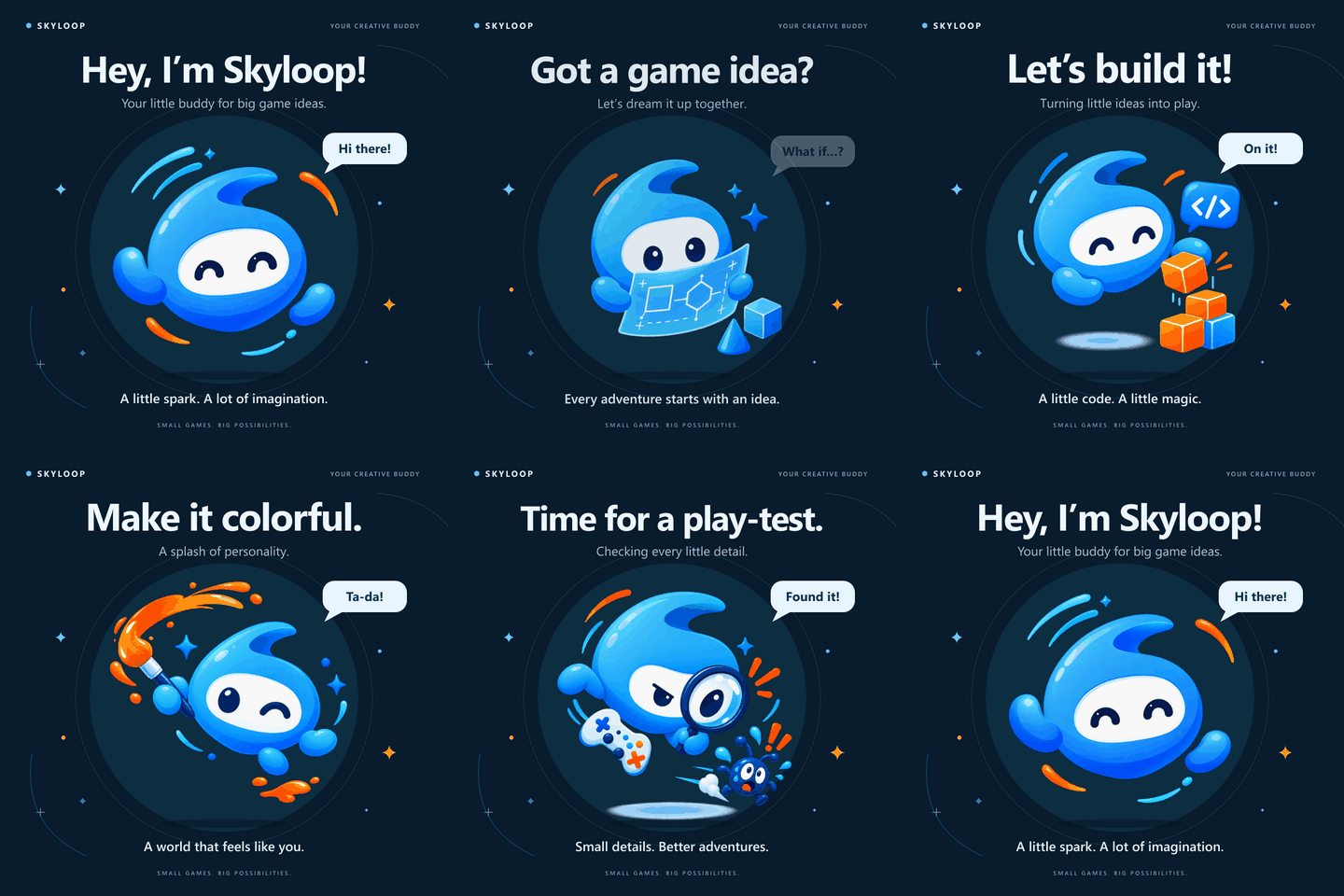
In my opinion, most agentic apps lack personality and identity. They feel robotic and impersonal. This might be preferred for enterprise-level tools or productivity apps like Codex and Claude Code. However, for other agentic apps, for example, one that lets you build games in minutes, a custom playful mascot can add huge value, which can make the app stand out from the crowd.
What Makes a Good Mascot?
- Expressive & Simple: Clean shapes that convey distinct emotions without visual clutter.
- State-Driven: Designed from the start to animate smoothly across different actions and moods.
- Brand-Aligned: Captures the product's identity—in my case, the playful chaos of building games.
- Versatile: Instantly recognizable whether it's a tiny UI avatar or a high-res marketing graphic.
Why Agentic Apps Need a Mascot
Most AI apps rely on cold text streams and generic loading spinners. A mascot transforms that UX:
- Turns Latency into Delight: Replaces boring loaders with playful micro-actions while the AI reasons and builds.
- Visualizes Agent States: Shows at a glance if the AI is planning, generating assets, or fixing bugs.
- Softens Errors: Makes retries and failures feel like relatable hiccups rather than broken software.
- Creates a Companion: Turns a transactional prompt box into a fun, collaborative creative partner.
How I Designed My Mascot
Since I already had a brand identity for my app, I knew I wanted my mascot to be a wavy, floating shape that represents the creative chaos of making games, with a playful and friendly expression. I wanted it to have different states for different emotions and actions. For example, when planning, it should be calm and focused. When building, it should be excited and energetic.
So, I simply gave the ChatGPT web version this prompt to generate a mascot idea based on my brand logo and what I wanted:
💬 Prompt: "This is the logo of the app that lets anyone build games with simple prompts. after prompting, the AI agent will use it's tools and everything to build a functioning game. I want you to build me a personality for the AI agent that users will interact with, while building the game. like prompting, asking for fixing issues, and all. I want to add micro interactions/movements for things like working, working hard, planning, painting assets, etc. As for the design, it should be minimal enough to be simply drawable in svg formats later. I want it to be vibrant, and utilize the blue side of the logo more than the red/orange sides. Still not a full guideline, let's brainstorm on this."
💡 Note: The prompt was intentionally kept open-ended to allow for creative freedom and exploration of different ideas.
I got really good ideas for the mascot. In summary, it suggested 3 directions:
- A — Cute Builder: More expressive eyes, bouncy, playful, slightly chaotic.
- B — Creative Spirit: Abstract floating blue creature, elegant motion, more premium, less “mascot-y.”
- C — Game Dev Gremlin: Still visually minimal, but much more personality: panics during bugs, paints things, tests games, celebrates, gets tired while working hard. This one could become very memorable.
I decided to go with a mix of B and C because I wanted more personality, yet something abstract and premium at the same time. So after that, in the same chat session, I asked it to generate a mascot design idea poster. I received this:
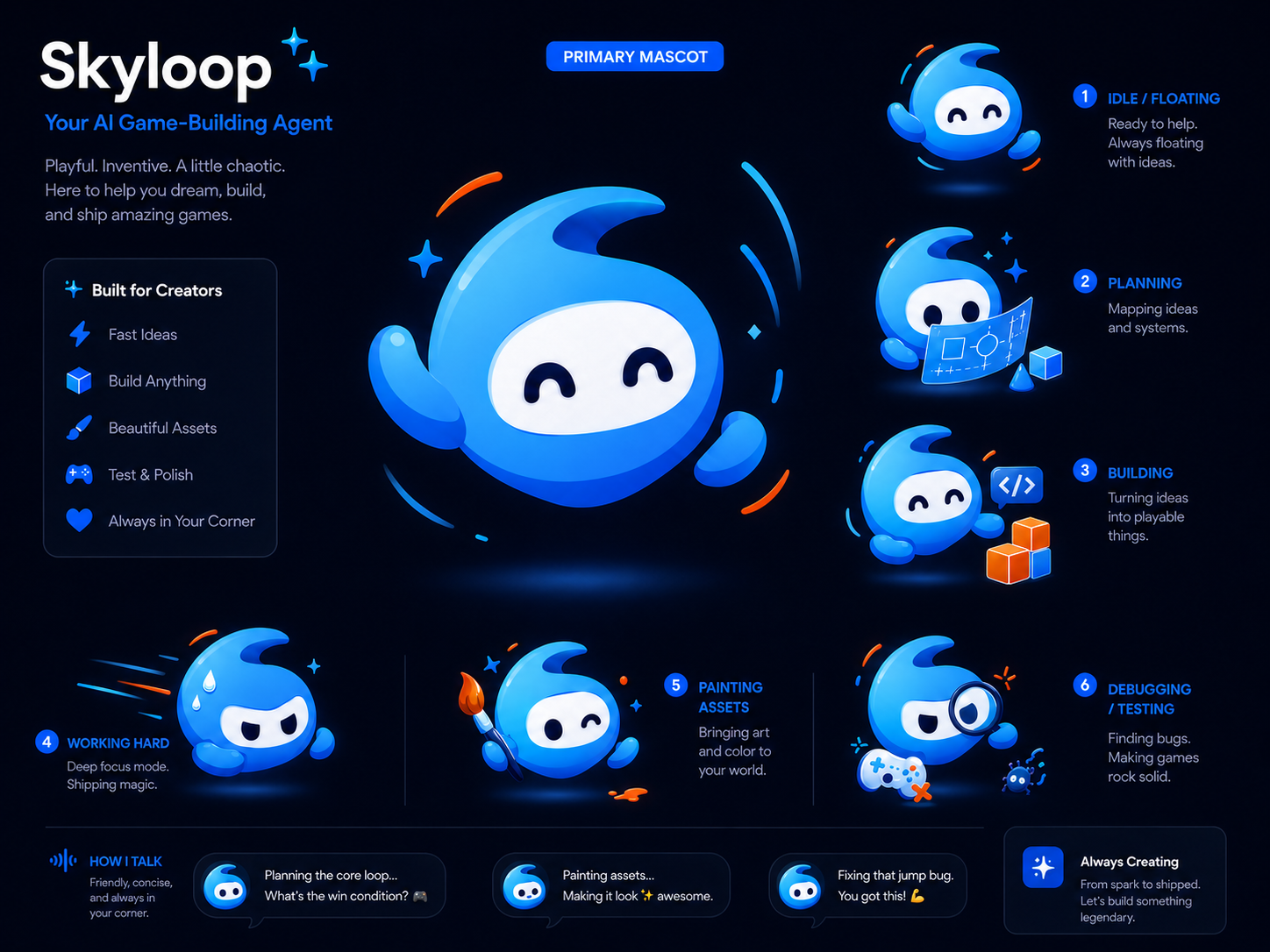
I loved it and without a second thought, I decided to go with it.
From Design Idea to Functional Animated Mascot
Initially, I wanted to build a premium, Duolingo-style character with fluid animations. However, turning the generated image into a functional animated character was a lot more complicated than I expected. Since a fluid animation requires a simplified vector image rather than a raster image like the one generated by ChatGPT, I would need to manually trace it into a vector image. This is a time-consuming and technically demanding process.
Asking ChatGPT to generate a vector image for the design was no good either as you can see below:
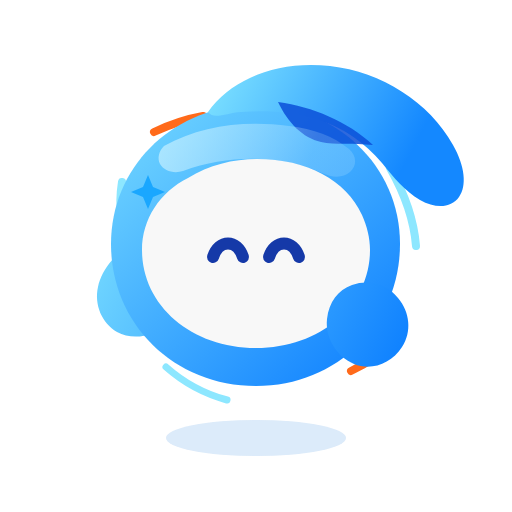
It stripped away most of the character's depth, dynamic contours, and charm—reducing it to a flat graphic.
After a bit of thinking, I decided to go with a low-FPS frame animation consisting of 4 frames for each state of the mascot. The most important part of this approach is that the generated images now need to have transparent backgrounds. The frames should be at the same aspect ratio and size. And obviously, the mascot's movements should progress from frame to frame in the same direction—not randomly.
Surprisingly, this was not hard to do with ChatGPT. I opened a new chat session and prompted this:
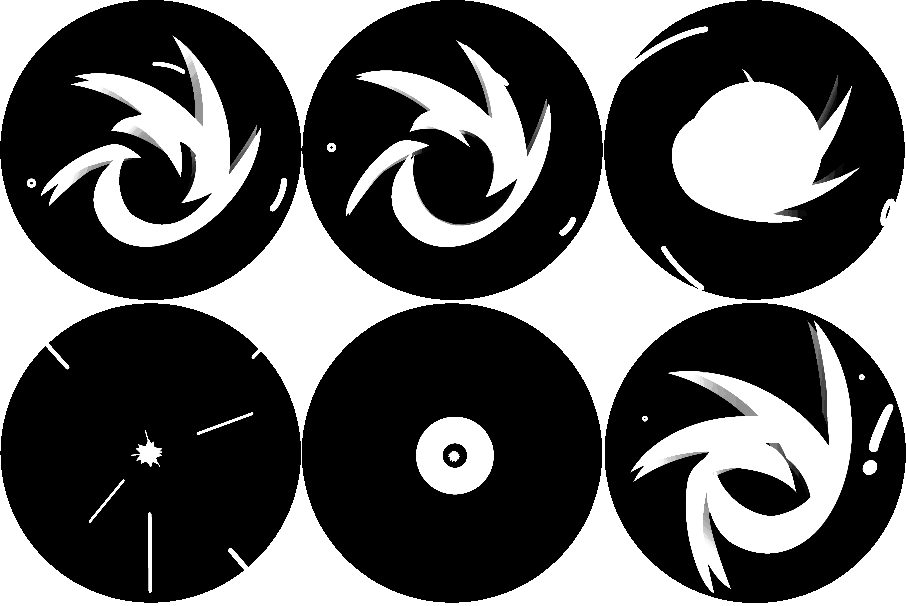
💬 Prompt: "for this idea, i want you to build me frames for idle/floating state (1), with transparent backgrounds. generate 4 frames and make sure they progress in the same direction. Also the frames should be with same aspect ratio and size."
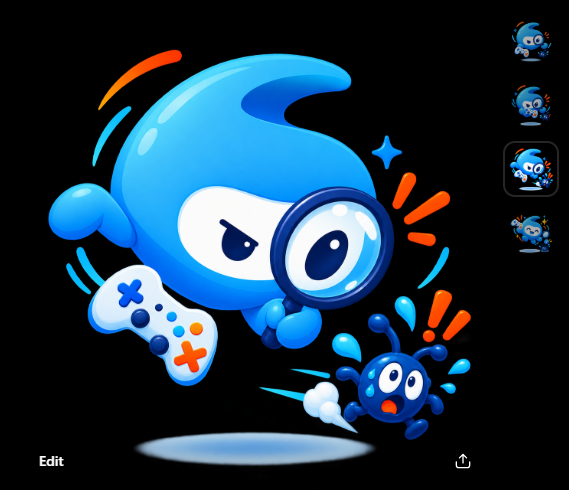
And received 4 progressing frames like these:
Using Frames in the App
Before the mascot, I was using a generic Rive animation for my agent building process. So, I had to replace the Rive animation with the mascot frames. Also, unlike before, now we have multiple states: idle, planning, building, working hard, painting assets and debugging/testing. I downloaded the frames from ChatGPT and organized them in sub-folders.
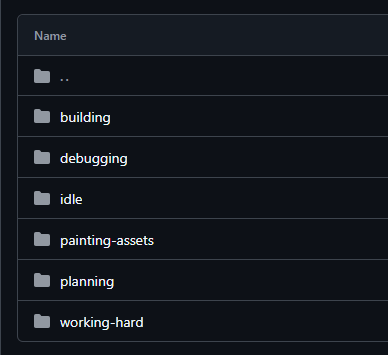
Instead of using heavy GIFs or complex runtime sprite sheets, the mascot is implemented as a lightweight 4-frame PNG flipbook in Flutter.
To create a natural, fluid loop from just 4 images, it uses an 8-step ping-pong sequence (1 → 1 → 2 → 3 → 4 → 4 → 3 → 2) with a brief hold on the end frames. A repeating AnimationController drives the clock, and Image.asset renders the active frame with gaplessPlayback: true and pre-warmed image caching to avoid any flickering between swaps:
// 8-step ping-pong sequence over 4 frames: 1 -> 1 -> 2 -> 3 -> 4 -> 4 -> 3 -> 2
static const _frameSequence = <int>[0, 0, 1, 2, 3, 3, 2, 1];

void _onTick() {
  final nextIndex =
      (_controller.value * _frameSequence.length).floor() %
      _frameSequence.length;
  if (nextIndex != _sequenceIndex && mounted) {
    setState(() => _sequenceIndex = nextIndex);
  }
}

@override
Widget build(BuildContext context) {
  final frameIndex = _frameSequence[_sequenceIndex];
  final path = 'assets/images/avatar/${_pose.name}/${frameIndex + 1}.png';

  return Image.asset(
    path,
    fit: BoxFit.contain,
    gaplessPlayback: true, // Prevents blank flashes during frame swaps
  );
}
Results
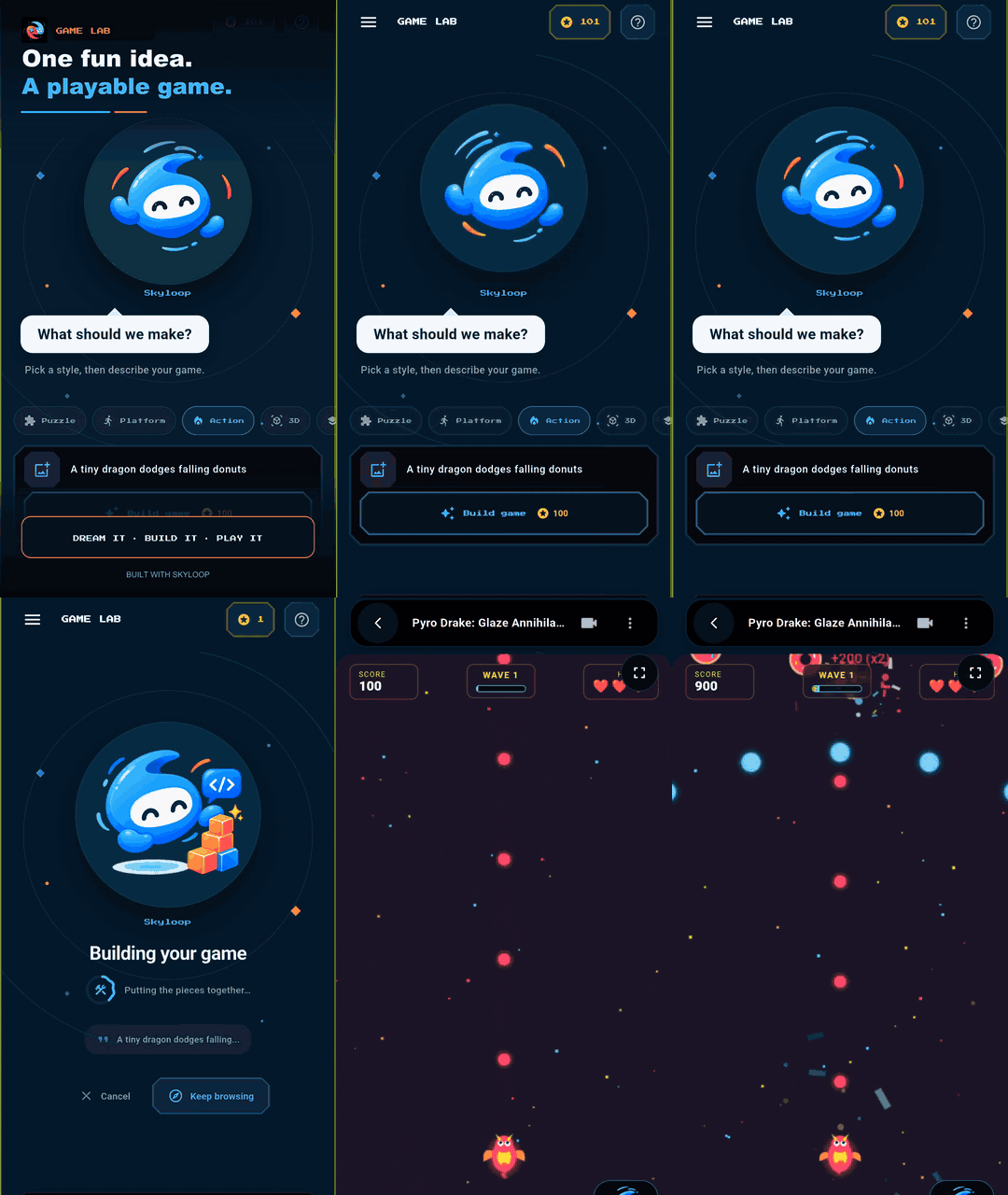
The Skyloop mascot in action as it generates a new game out of a vague prompt.
Limitations of Generating a Mascot with AI
I am not an expert in this design field, but the process was easy and fast for me. However, this might not be for everyone. Especially for already established brands, it might require professional designers and animators to recreate the mascot with their existing brand guidelines and assets. Using AI is hit-or-miss.
As for the animated mascot frames, it's possible that for some mascot designs, AI might not be able to generate frames that progress in the same direction or maintain consistency. In such cases, manual editing or using more advanced animation techniques might be required. Even for my design, the frames are not perfectly in the same direction, especially the idle state, with the spiral motion of curved lines around the mascot. I tried to revise it by prompting for edits, but the AI seemed to really struggle there.
Possible Marketing Uses
This is the area where the mascot shines the most. Unlike in-app assets, marketing content is not interactive, so we can use one of the frontier image/video generation models to generate high-quality, high-FPS animations for various scenarios and emotions. This can be highly engaging for social media marketing.
Conclusion
It was a fun and rewarding experience to design a mascot for my app. The process was relatively simple and allowed for a lot of creativity. The ability to generate high-quality, high-FPS animations in the future for marketing purposes with AI is a huge plus. Overall, I'm very happy with the results and would recommend it to anyone looking to add a mascot to their product.
👏Enjoyed this article?
Drop some claps if you found this article helpful.
From the archive